THE OWNER'S EDITIONCOMMERCIAL REAL ESTATE • FIELD NOTESVOL. 01
PROOF STACKING

Strategy / Selling / Commercial Property

How to Sell
Commercial Real Estate

The complete guide to preparing the asset, creating genuine competition, and maximizing your sales price.

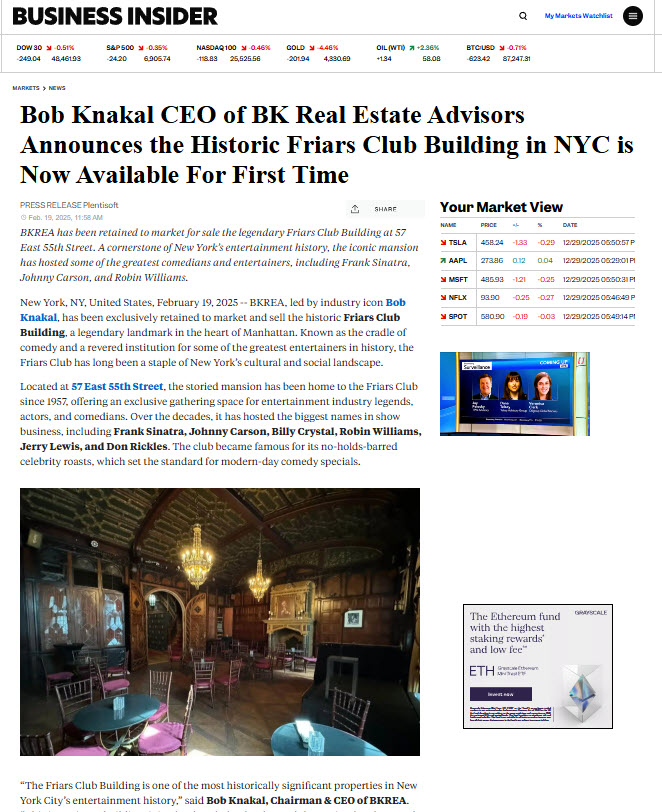
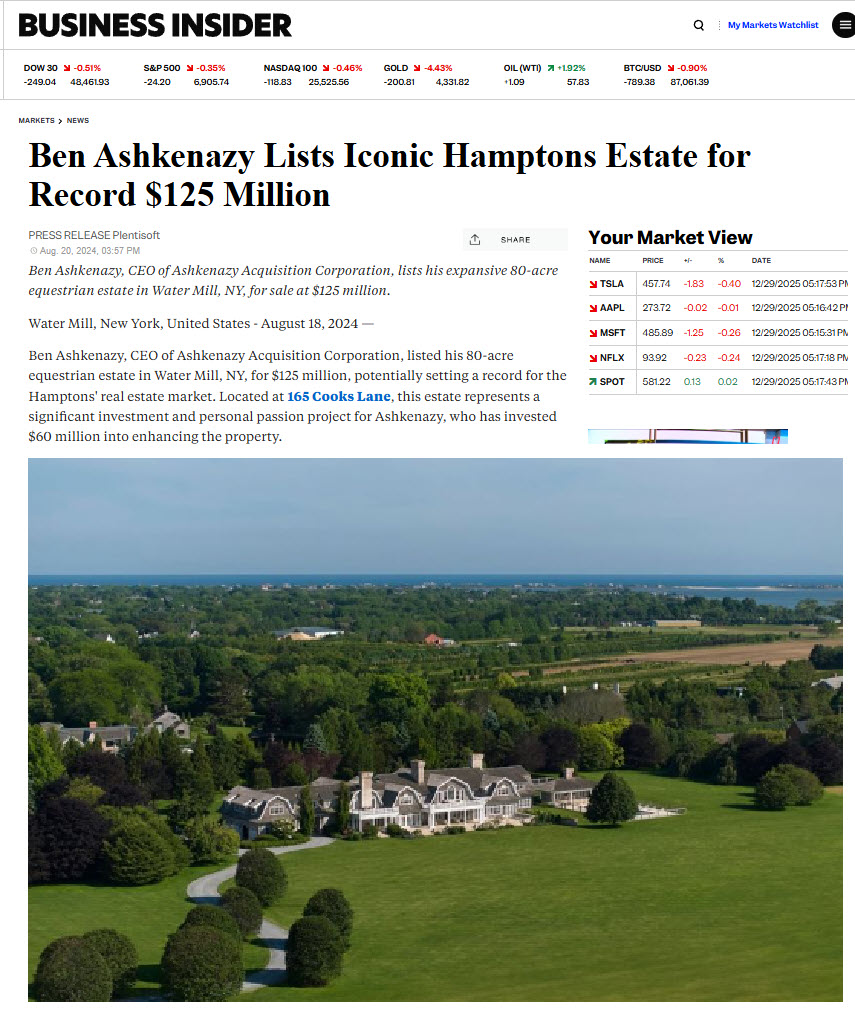
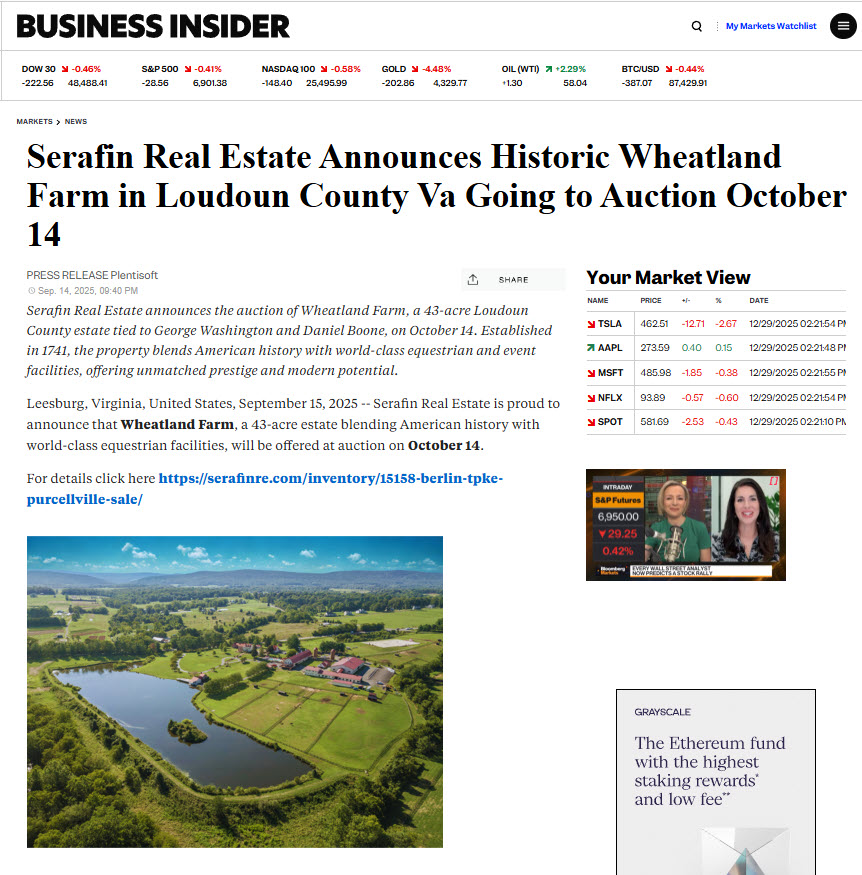
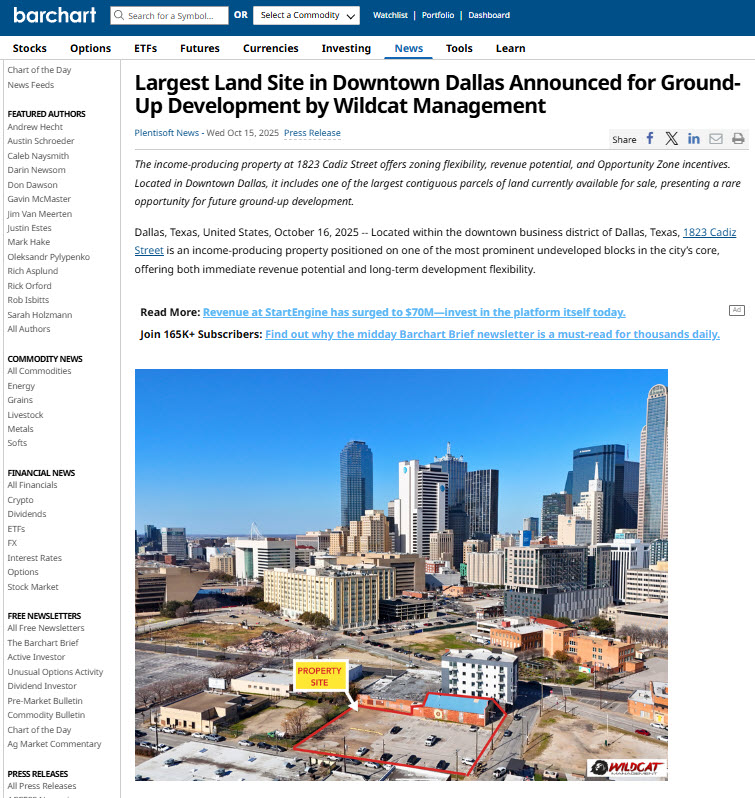
Business Insider press release for the Wheatland Farm auctionBarchart press release for the downtown Dallas development siteBusiness Insider press release for the historic Friars Club buildingBusiness Insider press release for the Ashkenazy Hamptons estate

Four examples of commercial real estate stories carried by major business and financial publications. Preparation makes the value visible; exposure gives buyers a reason to compete.

01Evidence builds buyer confidence
02Exposure creates real competition
03Execution protects the closing

Five phases.
One coordinated sale.

The best outcomes are usually won before launch. Work through the sale in sequence, so each phase makes the next one stronger. Organization and transparency make a seller credible; hidden problems only create doubt when they surface later.

“Information you bring forward is information you control.”
01

Set the strategy

Pre-listing

Define what a successful sale means before the property ever reaches the market.

Objective & timeline

Decide whether the sale is governed by a date or a number. Align pricing, carrying costs, and expectations with that decision.

Deal team

Engage a commercial broker, real estate attorney, CPA or tax strategist, and—where appropriate—an environmental consultant early.

Broker Opinion of Value

Request a written, well-supported BOV that shows comparable sales, income analysis, market cap rates, and an estimated marketing period.

Property audit

Review physical condition, environmental history, leases, rent roll, zoning, entitlements, certificates of occupancy, and unused development potential.

02

Make the case

Prepare the asset

Clarity in the financials and presentation gives buyers confidence to underwrite aggressively.

Financial package

Prepare a reconciled T-12, two prior years, a detailed rent roll, WALT, and clearly separated actual and projected performance.

Physical presentation

Prioritize landscaping, striping, signage, lighting, clean vacant space, and small repairs that shape a buyer’s first impression.

Visual media

Plan professional photography, aerials, a virtual tour, and test fits. Image-ready areas on this site can be populated when your assets are ready.

Offering memorandum

Build a concise investment thesis with sourced market data, quantified highlights, and direct disclosure of notable considerations.

03

Create competition

Market with reach

Your best buyer pays more when a credible second buyer is in the room.

Three-tier exposure

Reach local strategic buyers, regional operators, and national or institutional capital at the same time.

Press distribution

Use credible, searchable news distribution to reach buyers who are not actively watching listing platforms.

Digital stack

Give the property a dedicated website, segmented email campaign, targeted paid social, and a narrated video walkthrough.

Broker network

Use thoughtful pre-marketing, broker opens, direct outreach, and—when confidentiality is the priority—a deliberate off-market process.

04

Protect certainty

Negotiate & diligence

The strongest offer combines price with the highest probability of closing on schedule.

Compare the whole offer

Weigh earnest money, contingency periods, financing readiness, buyer track record, certainty, and speed—not headline price alone.

Open a complete data room

Organize Financials, Leases, Property Condition, Environmental, Title & Survey, Zoning & Permits, Contracts, and Insurance.

Control the information

Resolve title issues, tenant estoppels, lease reconciliation, environmental history, and valuation support before they become surprises.

Understand the PSA

Work with counsel on diligence rights, deposits, closing conditions, assignment, default remedies, representations, survival, and post-closing duties.

05

Finish with control

Close cleanly

Early preparation turns the final weeks from a scramble into a managed handoff.

Title & survey

Review every exception, easement, encroachment, covenant, and unreleased mortgage with enough time to clear it.

Closing statement

Reconcile rent, CAM, taxes, insurance, utilities, security deposits, and every proration before signing.

Final delivery

Complete estoppels, agreed repairs, the final walkthrough, and the transfer of keys, codes, records, and access credentials.

Post-close plan

Track 1031 deadlines where applicable and confirm tax filings, transition obligations, consulting terms, and non-compete provisions.

Align the ask with the clock.

Any of these paths can be right. The important thing is accounting for carrying costs and choosing deliberately.

TimelinePricing postureOptimizes for
30–90 daysAt or slightly inside marketCertainty & speed
4–8 monthsAt market, with roomBalance
9–18 monthsAbove market, patientMaximum price

Three audiences. One launch.

Run all three tiers together to widen the field and give the strongest buyer someone credible to bid against.

Local

Strategic premium

Neighboring owners, tenants, operators, broker networks, and business groups.

Regional

Expansion capital

Operators and investors who already understand your market fundamentals.

National

Deepest reach

1031 buyers, institutions, funds, REITs, and asset-class specialists.

From decision to done.

Use this as the working brief for your team.

Pre-listing

Define objective and timeline

Retain broker, attorney, and CPA

Order a Broker Opinion of Value

Audit condition, leases, zoning, and environmental history

Preparation

Gather three years of financials

Reconcile the rent roll and leases

Address curb appeal and deferred maintenance

Create photography, aerials, tour, and offering memorandum

Marketing

Launch the property website

Distribute the property press release

Activate local, regional, and national channels

Schedule property and broker tours

Deal & close

Compare price, terms, and buyer strength

Open the indexed data room

Negotiate and execute the PSA

Complete title, survey, estoppels, statement, and closing

Answers before you list.

How long does it take to sell commercial real estate?+

Typically six to twelve months from decision to closing in a normal market: roughly three to six months of marketing and 60–90 days from contract to close. Well-prepared assets in active submarkets may move faster.

What’s the difference between a BOV and an appraisal?+

A Broker Opinion of Value is a broker’s market-based estimate, designed for pricing and pre-listing strategy. A formal appraisal follows standardized methodology and is used when a lender, court, or tax authority requires independent valuation.

Should I sell with a broker or on my own?+

A direct sale can work when you already have the right buyer. For larger or more complex assets, a broker’s exposure and the competition it creates can outweigh the commission. What the commission purchases is the buyer pool.

What documents do buyers request first?+

The T-12 operating statement, two prior years, current rent roll, executed leases and amendments, tax bills, insurance loss runs, title and survey materials, and environmental reports.

Should I disclose known property issues?+

Disclosure duties vary by state, so follow your attorney’s advice. Strategically, early transparency lets buyers price an item from the beginning instead of using it to renegotiate mid-process.

Can I start a 1031 exchange after closing?+

No. The exchange must be established before closing and the proceeds must be held by a qualified intermediary. Discuss the structure with your attorney and CPA early.
Two places to begin

Turn preparation into momentum.

Start with a supported view of value. Then build the kind of exposure that reaches buyers locally, regionally, and nationally.

Edward J. Winslow

Edward J. Winslow

Edward is the creator of Proof Stacking® and founder of ProofStacking.ai. He brings more than 30 years in commercial real estate and marketing strategy—from CBRE to working alongside Bob Knakal at Massey Knakal Realty Services.

He is the author of Proof Stacking and creator of the 1-Page Case Study. His work has been featured in The New York Times, Business Insider, and across the Google News network.

Bob Knakal

Co-Author: Bob Knakal

Bob Knakal is Chairman & CEO of BKREA, founded in 2024. Over 42 years he has brokered 2,411 buildings totaling $24.6 billion in transactions. He co-founded Massey Knakal Realty Services, which became CoStar's #1 NYC building seller for 14 consecutive years before its $100 million acquisition by Cushman & Wakefield. He writes the 'Concrete Thoughts' column for Commercial Observer, received REBNY's Louis Smadbeck Lifetime Achievement Award, and has been profiled by The New York Times.

Connect with Bob Knakal on LinkedIn